Thinking about CRM software cost? You’re not alone. Businesses worldwide are weighing the price tags of customer relationship management tools, trying to balance features, scalability, and budget. Let’s break down what really drives these costs—and how to get the most value.
Understanding CRM Software Cost: What You’re Really Paying For

When evaluating CRM software cost, it’s essential to look beyond the sticker price. The total investment includes licensing, implementation, training, customization, and ongoing support. Many companies underestimate these hidden expenses, leading to budget overruns and dissatisfaction.
Licensing Models and Their Impact on CRM Software Cost
CRM platforms typically offer several licensing models: per-user, per-feature, tiered, or flat-rate subscriptions. The most common is the per-user, per-month model, where costs scale with the number of team members using the system.
- Per-user pricing: Ideal for small teams but can become expensive as your company grows.
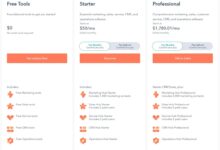
- Tiered pricing: Offers increasing feature sets at higher price points (e.g., Basic, Pro, Enterprise).
- Flat-rate pricing: A single fee for unlimited users—rare but valuable for large teams.
For example, Salesforce starts at $25/user/month, while Zoho CRM offers a free tier and paid plans from $14/user/month. These differences highlight how licensing models directly affect CRM software cost.
Hidden Costs That Inflate CRM Software Cost
Many businesses are shocked when their CRM software cost doubles after implementation. Why? Because they didn’t account for:
- Onboarding and training: Employees need time and resources to learn the system.
- Data migration: Transferring existing customer data can require third-party tools or consultants.
- Customization: Tailoring workflows, dashboards, and integrations often requires developer hours.
- Integration fees: Connecting your CRM to email, marketing automation, or ERP systems may incur extra charges.
“The real CRM software cost isn’t just the monthly subscription—it’s the total cost of ownership over three years.” — Gartner Research
CRM Software Cost by Deployment Type: Cloud vs. On-Premise
The way you deploy your CRM—cloud-based (SaaS) or on-premise—has a massive impact on both upfront and long-term CRM software cost.
Cloud-Based CRM: Lower Upfront, Higher Recurring Costs
Cloud CRM solutions like HubSpot, Salesforce, and Microsoft Dynamics 365 dominate the market due to their ease of deployment and scalability.
- No need for physical servers or IT infrastructure.
- Automatic updates and security patches included.
- Monthly or annual subscription fees range from $0 to $300+/user/month.
While cloud CRM reduces initial capital expenditure, the recurring fees can add up. Over five years, a team of 50 using a $50/user/month CRM will spend $300,000—excluding add-ons.
On-Premise CRM: High Initial Investment, Lower Long-Term Fees
On-premise CRM systems require purchasing licenses, setting up servers, and maintaining internal IT staff.
- Upfront costs can exceed $100,000 for medium-sized businesses.
- Annual maintenance fees are typically 15-20% of the license cost.
- Full control over data and customization.
Though less common today, industries like finance and government still prefer on-premise solutions for compliance and security. However, the CRM software cost for on-premise deployments is often 3-5x higher in the first year compared to cloud options.
Top CRM Platforms and Their Real-World CRM Software Cost
To understand CRM software cost, let’s examine leading platforms and their actual pricing structures—including what’s often left out of marketing materials.
Salesforce: The Industry Leader with Complex Pricing
Salesforce is the most widely used CRM, but its pricing is notoriously complex.
- Salesforce Essentials: $25/user/month (basic CRM for small teams).
- Sales Cloud Professional: $75/user/month (sales automation, lead management).
- Enterprise and Unlimited: $150–$300+/user/month (advanced customization, API access).
Additional costs include:
- Marketing Cloud: starts at $400/month.
- Service Cloud: $75+/user/month.
- Consulting and implementation: $5,000–$50,000+.
For a mid-sized company, the real CRM software cost with Salesforce can easily exceed $100,000 annually.
HubSpot CRM: Free to Start, Expensive to Scale
HubSpot attracts users with a powerful free CRM, but costs rise quickly as you add features.
- Free CRM: Contact management, email tracking, basic reporting.
- Starter: $45/month (marketing, sales, and service hubs).
- Professional: $450–$1,200+/month per hub.
- Enterprise: $3,200+/month per hub.
Unlike per-user models, HubSpot often charges per “seat” and per feature set. A company using all three hubs at the Professional level could face a CRM software cost of over $3,000/month—without customization.
Microsoft Dynamics 365: Integrated but Costly
Dynamics 365 combines CRM and ERP functionalities, making it ideal for enterprises already using Microsoft 365.
- Sales Professional: $65/user/month.
- Customer Service: $95/user/month.
- Marketing: $2,000/month for 1,000 contacts.
Integration with Office 365 and Azure is seamless, but implementation often requires third-party partners. Average CRM software cost for a 100-user company: $100,000+/year.
Factors That Influence CRM Software Cost
Several variables determine how much you’ll pay for a CRM. Understanding these can help you negotiate better deals and avoid overspending.
Number of Users and Team Size
This is the most obvious factor. Most CRMs charge per user, so doubling your team often doubles your bill. However, some vendors offer volume discounts for 50+ users.
- Small teams (1–10 users): $100–$500/month.
- Mid-sized (11–50 users): $1,000–$5,000/month.
- Enterprise (50+ users): $10,000+/month.
Consider whether all employees need full access. Some CRMs allow “light” or “read-only” users at lower rates.
Feature Requirements and Module Add-Ons
Basic CRM features (contact management, task tracking) are often included in entry-level plans. But advanced modules like marketing automation, AI analytics, or telephony integration come at extra cost.
- Sales automation: +$20–$50/user/month.
- Customer service portal: +$30–$75/user/month.
- AI-powered insights: +$50–$100/user/month.
For example, adding Pardot (Salesforce’s marketing tool) can increase CRM software cost by 200%. Always audit your must-have vs. nice-to-have features.
Customization and Integration Needs
Every business has unique workflows. Customizing a CRM to match your sales funnel or support process requires development time.
- Basic integrations (email, calendar): often free.
- Custom API connections: $5,000–$20,000.
- Workflow automation: $3,000–$15,000.
According to Capterra, 68% of companies exceed their initial CRM budget due to unplanned customization.
How to Reduce CRM Software Cost Without Sacrificing Quality
High CRM software cost doesn’t have to mean high value. Smart strategies can cut expenses while improving adoption and ROI.
Negotiate with Vendors and Leverage Competing Quotes
Most CRM vendors expect negotiation. Don’t accept the listed price.
- Ask for annual billing discounts (often 10–20% off).
- Request free training or onboarding credits.
- Use competing quotes as leverage (e.g., “Zoho offers similar features at half the price”).
Enterprise clients often secure multi-year contracts with bundled services, reducing the effective CRM software cost by 30% or more.
Start Small and Scale Gradually
Instead of buying the Enterprise plan upfront, begin with a lower tier and upgrade as needed.
- Start with core sales features, then add marketing later.
- Use free trials to test usability and performance.
- Train a pilot team before company-wide rollout.
This phased approach reduces risk and spreads out the CRM software cost over time.
Choose Open-Source or Low-Cost Alternatives
If budget is tight, consider open-source or affordable CRM solutions.
- SuiteCRM: Free, open-source, based on SugarCRM.
- Dolibarr: Open-source ERP and CRM hybrid.
- Bitrix24: Free for up to 12 users; paid plans from $49/month.
While these may lack some enterprise features, they offer solid functionality at a fraction of the CRM software cost.
Measuring ROI: Is Your CRM Software Cost Justified?
Spending money on a CRM is only smart if it delivers measurable returns. Too many companies ignore ROI, leading to underused systems and wasted budgets.
Key Metrics to Track CRM ROI
To evaluate whether your CRM software cost is worth it, monitor these KPIs:
- Sales cycle length: Has it shortened after CRM implementation?
- Conversion rates: Are more leads turning into customers?
- Customer retention: Is churn decreasing?
- Team productivity: Are reps spending less time on admin tasks?
A study by Nucleus Research found that CRM systems deliver an average $8.71 return for every $1 spent.
Calculating Total Cost of Ownership (TCO)
TCO includes all direct and indirect costs over a 3–5 year period:
- Subscription fees
- Implementation and setup
- Training and change management
- Maintenance and support
- Opportunity cost of downtime or low adoption
Formula: TCO = (Annual License x 3) + Implementation + Training + Customization + Support
Compare this to the projected revenue increase or cost savings to determine true value.
Warning Signs of Poor CRM ROI
If your CRM software cost isn’t paying off, watch for these red flags:
- Low user adoption (less than 60% of team using it daily).
- Data entry is manual and inconsistent.
- Reports are outdated or ignored.
- Sales teams bypass the CRM to use spreadsheets.
“A CRM is only as valuable as the data it contains—and the people who use it.” — Forbes
Future Trends Affecting CRM Software Cost
The CRM landscape is evolving fast. New technologies and business models are reshaping how we think about CRM software cost.
AI and Automation: Premium Features at Rising Prices
AI-powered features like predictive lead scoring, chatbots, and sentiment analysis are becoming standard—but they come at a premium.
- Salesforce Einstein: +$50/user/month.
- HubSpot AI Tools: +$200–$500/month.
- Microsoft Copilot for Sales: +$30/user/month.
As AI becomes essential, CRM software cost will increasingly reflect access to intelligent automation.
Vertical-Specific CRMs: Higher Cost, Higher Value
Generic CRMs are being replaced by industry-specific solutions (e.g., real estate, healthcare, legal).
- These CRMs come pre-built with workflows, compliance features, and templates.
- Examples: LionDesk (real estate), ClinicSense (healthcare).
- Premium pricing due to specialized functionality.
While more expensive, they reduce customization needs and speed up ROI—potentially lowering long-term CRM software cost.
Usage-Based Pricing: Pay Only for What You Use
A growing trend is usage-based pricing—paying for actions (e.g., emails sent, API calls) rather than users.
- Beneficial for seasonal businesses or startups with fluctuating needs.
- Examples: SendGrid (email), Twilio (SMS), now influencing CRM pricing models.
- Reduces waste but can be unpredictable.
This model could disrupt traditional CRM software cost structures in the next 3–5 years.
Common Myths About CRM Software Cost
Misconceptions lead to poor decisions. Let’s debunk the most common myths.
Myth 1: Free CRM Means No Cost
Free CRMs like HubSpot or Zoho have limitations: user caps, fewer integrations, and limited support. Hidden costs include:
- Time spent managing workarounds.
- Need to upgrade quickly as your business grows.
- Lack of advanced reporting or automation.
While free CRMs reduce initial CRM software cost, they often lead to higher long-term expenses when scaling.
Myth 2: More Features = Better Value
Many companies pay for features they never use. A 2022 Gartner report found that businesses use only 40% of their CRM’s capabilities.
- Focus on core needs, not feature count.
- Complex systems reduce user adoption.
- Simpler CRMs often deliver faster ROI.
Value isn’t in features—it’s in usability and alignment with business goals.
Myth 3: Big Brands Always Cost More
While Salesforce and Microsoft are premium brands, their total CRM software cost depends on configuration. A well-negotiated enterprise deal might be cheaper per user than a mid-tier competitor.
- Volume discounts and bundled services lower effective cost.
- Long-term contracts can lock in favorable rates.
- Open-source CRMs may have higher hidden costs (support, customization).
Always compare total cost of ownership, not just sticker price.
What is the average CRM software cost for a small business?
The average CRM software cost for a small business (1–10 users) ranges from $50 to $500 per month. Free options like HubSpot CRM or Zoho CRM can start at $0, while premium platforms like Salesforce start at $25/user/month. Implementation and training can add $1,000–$5,000 upfront.
Does CRM software cost include implementation?
No, most CRM software cost quotes exclude implementation. Vendors typically charge separately for data migration, customization, training, and integration. These services can add 50–200% to the first-year cost, especially for complex systems like Salesforce or Dynamics 365.
Are there any truly free CRM software options?
Yes, several CRMs offer free plans with core features: HubSpot CRM, Zoho CRM, and Bitrix24. However, free versions often limit users, storage, or automation. They’re ideal for startups but may require upgrading as your business grows.
How can I reduce my CRM software cost?
You can reduce CRM software cost by negotiating annual contracts, starting with a lower-tier plan, using free trials, choosing open-source alternatives, and avoiding unnecessary add-ons. Also, ensure high user adoption to maximize ROI and justify the expense.
Is a cheap CRM worth it?
A cheap CRM can be worth it if it meets your core needs and is easy to use. However, very low-cost or free CRMs may lack security, scalability, or support. Evaluate total cost of ownership and long-term fit, not just the monthly price.
Understanding CRM software cost goes far beyond the monthly subscription. It’s about total value, long-term scalability, and alignment with business goals. From licensing models to hidden fees, and from ROI metrics to future trends, every factor plays a role in your final investment. By researching thoroughly, negotiating wisely, and focusing on real needs, you can choose a CRM that delivers maximum impact without breaking the bank. The most expensive CRM isn’t always the best—and the cheapest isn’t always a bargain. The key is finding the right balance between cost, functionality, and usability.
Further Reading:
