Navigating CRM system pricing can feel like decoding a secret language—expensive, confusing, and full of hidden traps. But what if you could crack the code and save thousands? Let’s demystify the real costs behind CRM platforms in 2024 with facts, not fluff.
Understanding CRM System Pricing: The Big Picture

Customer Relationship Management (CRM) systems are no longer just for enterprise giants. From solopreneurs to multinational corporations, businesses of all sizes rely on CRM tools to streamline sales, marketing, and customer service. However, one of the biggest hurdles when adopting a CRM is understanding its pricing structure. CRM system pricing isn’t just about a monthly fee per user—it’s a complex ecosystem of features, tiers, add-ons, and long-term commitments.

What Is CRM System Pricing?
CRM system pricing refers to the cost model applied by CRM software providers to deliver their services. These models vary widely, but they typically include subscription fees based on users, features, data volume, or usage levels. The pricing strategy directly impacts your return on investment (ROI), scalability, and long-term satisfaction with the platform.
According to Gartner, over 80% of organizations now use some form of CRM, making pricing transparency more critical than ever. Yet, many buyers still struggle to predict total costs due to hidden fees and unclear upgrade paths.
Why CRM Pricing Confuses Buyers
One major reason CRM system pricing confuses buyers is the lack of standardization across vendors. While some companies offer flat-rate pricing, others use tiered models with incremental feature unlocks. Add-ons like AI analytics, phone integration, or custom reporting can double your initial estimate.
- Lack of transparent breakdowns in vendor quotes
- Hidden costs for training, onboarding, or data migration
- Complexity in comparing apples-to-apples between platforms
“The most expensive CRM isn’t always the best, and the cheapest often ends up costing more in the long run.” — TechRadar CRM Analyst, 2023
Key Components That Influence CRM System Pricing
Several factors shape how much you’ll pay for a CRM. Understanding these elements helps you anticipate costs and avoid surprises:
- User Licenses: Most CRMs charge per user per month. More users = higher cost.
- Feature Tiers: Basic plans lack automation or integrations; premium tiers unlock advanced tools.
- Deployment Type: Cloud-based (SaaS) vs. on-premise solutions have vastly different cost structures.
- Support & Training: Premium support often requires an additional fee.
- Integration Costs: Connecting your CRM to email, marketing tools, or ERP systems may incur extra charges.
For example, Salesforce’s Sales Cloud starts at $25/user/month but jumps to $300/user/month for the most advanced Einstein AI features. That’s a 1,100% increase for top-tier functionality.
Types of CRM Pricing Models Explained
Not all CRM system pricing follows the same blueprint. Vendors use different models to appeal to various market segments. Knowing these models helps you choose the one that aligns with your budget and growth plans.
Subscription-Based Pricing (SaaS)
This is the most common CRM system pricing model today. You pay a recurring monthly or annual fee per user. The provider hosts the software in the cloud, handles updates, security, and maintenance.
- Examples: HubSpot, Zoho CRM, Salesforce
- Pros: Predictable costs, easy scalability, no infrastructure investment
- Cons: Long-term costs add up; limited control over data and customization
Many SaaS CRMs offer annual billing discounts—typically 10–20% off—making it financially smarter to commit upfront.
Per-User vs. Per-Feature Pricing
Some platforms charge based on the number of users, while others unlock features based on usage or modules purchased.
For instance, Zoho CRM offers a free plan for up to 3 users, then scales from $14 to $52/user/month depending on features like workflow automation and AI insights. This hybrid model blends user count with functionality.
- Per-User: Simpler to calculate but can become expensive with team growth.
- Per-Feature: Allows small teams to access advanced tools without paying for unused seats.
One-Time License (On-Premise) Pricing
Less common today, some businesses still opt for on-premise CRM systems where they purchase a perpetual license. This involves a large upfront cost but eliminates recurring subscription fees.
- Examples: Microsoft Dynamics 365 (on-premise option), SAP CRM
- Pros: Full control over data, no recurring fees, customizable infrastructure
- Cons: High initial investment, requires IT staff for maintenance, slower updates
According to IDC, only 12% of new CRM deployments in 2023 were on-premise, down from 35% in 2018. The shift toward cloud-based CRM system pricing is undeniable.
Top CRM Platforms and Their Pricing Breakdown
To make informed decisions, let’s compare the leading CRM platforms and dissect their CRM system pricing strategies. This section provides real-world data to help you evaluate value versus cost.
Salesforce: The Enterprise Leader
Salesforce dominates the CRM market with a 19.8% global share (Statista, 2023). But its pricing reflects its premium positioning.
- Sales Cloud Essentials: $25/user/month – Basic lead and opportunity tracking
- Professional: $80/user/month – Includes workflow automation and email integration
- Enterprise: $165/user/month – Advanced customization and API access
- Unlimited: $330/user/month – 24/7 support, sandbox environments
Add-ons like Einstein Analytics ($75/user/month) or Service Cloud ($25–$150/user/month) can push total costs into the thousands for mid-sized teams.
HubSpot CRM: The Free-Friendly Challenger
HubSpot has gained massive popularity by offering a powerful free CRM. Its CRM system pricing is designed to attract startups and SMBs, then upsell them into marketing, sales, and service hubs.
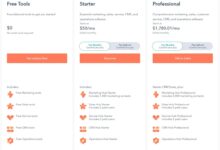
- Free Plan: Unlimited users, contact management, email tracking
- Starter: $45/month (billed annually) – Includes basic automation and live chat
- Professional: $450/month (billed annually) – Marketing automation, A/B testing
- Enterprise: $1,200/month (billed annually) – Advanced reporting, custom objects
While the free tier is generous, scaling beyond basic needs gets expensive quickly. A full HubSpot stack can cost more than Salesforce for equivalent functionality.
Microsoft Dynamics 365: The Integrated Powerhouse
Dynamics 365 blends CRM and ERP capabilities, making it ideal for businesses already using Microsoft 365. Its CRM system pricing is modular, allowing you to pay only for what you need.
- Sales Professional: $60/user/month
- Customer Service: $95/user/month
- Marketing: $2,000/month (for up to 10K contacts)
- Field Service: $95/user/month
The advantage? Deep integration with Outlook, Teams, and Power BI. The downside? Complexity in setup and higher learning curve. For more details, visit Microsoft’s official pricing page.
Hidden Costs in CRM System Pricing You Can’t Ignore
The advertised price is rarely the final price. Many businesses underestimate total CRM costs because they overlook hidden fees that emerge after implementation.
Implementation and Onboarding Fees
Most vendors charge for setup, data migration, and training. For enterprise CRMs, these services can cost tens of thousands of dollars.
- Salesforce implementation averages $10,000–$50,000 depending on complexity
- HubSpot partners charge $5,000–$20,000 for full onboarding
- Custom field mapping and legacy data import add 20–40 hours of billable work
Some providers offer free onboarding for annual contracts, so always negotiate this upfront.
Integration and API Usage Charges
Connecting your CRM to other tools (like Mailchimp, Shopify, or QuickBooks) often requires third-party middleware like Zapier or native API access.
- Zapier charges $19–$99/month for CRM integrations
- Salesforce charges extra for high-volume API calls beyond limits
- Custom API development can cost $5,000+
Always check API rate limits and integration costs before committing.
Training, Support, and Renewal Surprises
Initial training is often included, but ongoing support isn’t. Premium support tiers can add 15–25% to your annual cost.
- Salesforce offers $1,000/year per user for premium support
- Renewal price hikes of 10–20% are common after the first year
- Internal training costs (lost productivity) are rarely factored in
“We budgeted $12,000 for our CRM, but spent $38,000 in the first year once training, migration, and add-ons were included.” — CMO, Mid-Sized Tech Firm
How to Choose the Right CRM Based on Pricing and Value
Price alone shouldn’t dictate your CRM choice. Instead, focus on value—how much functionality, efficiency, and revenue growth you gain per dollar spent.
Assess Your Business Size and Needs
A 5-person startup doesn’t need an enterprise-grade CRM. Match your platform to your current scale and projected growth.
- Solopreneurs: Free or $10–$20/user/month plans (e.g., Zoho, HubSpot Free)
- SMBs (5–50 users): $20–$50/user/month with automation (e.g., Pipedrive, Freshsales)
- Enterprises (50+ users): $80+/user/month with customization (e.g., Salesforce, Dynamics)
Calculate Total Cost of Ownership (TCO)
TCO includes all direct and indirect costs over 3–5 years:
- Subscription fees
- Implementation and migration
- Training and change management
- Integration tools
- Support and renewal increases
- Opportunity cost of downtime or poor adoption
For example, a 20-user Salesforce deployment at $80/user/month totals $19,200/year in subscriptions. Add $15,000 for implementation and $5,000/year for integrations, and your first-year TCO jumps to $39,200.
Look for Scalability and Flexibility
The best CRM system pricing models grow with you. Avoid platforms that lock you into long contracts or make downgrading difficult.
- Choose vendors with month-to-month options
- Ensure feature upgrades are seamless
- Verify data export rights in case you switch later
Platforms like Pipedrive offer flexible plans that scale from $14.90 to $99/user/month, making it easier to adjust as your team grows.
Free vs. Paid CRM: Is Free Really Better?
Free CRMs like HubSpot, Zoho, and Freshsales have disrupted the market. But are they truly cost-effective, or do they set you up for future pain?
Pros of Free CRM Systems
Free CRMs lower the barrier to entry and allow small businesses to test-drive functionality without risk.
- No upfront cost
- Easy to set up and use
- Unlimited contacts on some platforms
- Ideal for solopreneurs and freelancers
Cons of Free CRM Systems
Limitations become apparent as your business grows:
- Limited automation (e.g., only 1–2 workflows)
- No phone support
- Basic reporting with no customization
- Branding in emails (e.g., ‘Powered by HubSpot’)
- Restricted API access
Most free CRMs are designed to upsell you into paid tiers. HubSpot, for instance, limits email sending to 100 emails/month on the free plan—forcing upgrades for marketing campaigns.
When to Upgrade from Free to Paid
Consider upgrading when you experience any of the following:
- You’re manually doing tasks that could be automated
- Your team spends more than 2 hours/week managing CRM data
- You need to integrate with accounting or e-commerce platforms
- Leadership demands detailed sales forecasting or pipeline reports
- Customer service response times are suffering due to lack of ticketing
Upgrading early can prevent data silos and inefficiencies that cost more to fix later.
Future Trends in CRM System Pricing (2024 and Beyond)
The CRM landscape is evolving fast. New technologies and market demands are reshaping how vendors price their products.
Rise of AI-Powered Features and Their Cost Impact
AI is no longer a luxury—it’s becoming a core CRM feature. From predictive lead scoring to chatbot assistants, AI tools are driving up CRM system pricing.
- Salesforce Einstein adds $75–$150/user/month
- HubSpot’s AI content tools cost $200+/month as an add-on
- Microsoft Copilot for Sales is expected to launch with a $30/user/month premium
While AI boosts productivity, it also creates a two-tier market: those who can afford AI-enhanced CRMs and those who can’t.
Pay-As-You-Go and Usage-Based Models
Some vendors are experimenting with usage-based pricing—charging based on emails sent, calls logged, or leads processed.
- Amplyfy (a newer CRM) charges $0.01 per lead interaction
- Twilio Segment bills based on monthly tracked users
- This model benefits low-volume users but can spike costs during high-activity periods
Expect more hybrid models combining per-user and per-usage fees in the next 2–3 years.
Consolidation and Bundled Suite Pricing
CRM vendors are bundling sales, marketing, service, and commerce tools into unified platforms. This reduces integration costs but increases subscription fees.
- HubSpot’s Suite Products (Sales Hub, Marketing Hub, etc.) cost up to $5,000/month
- Salesforce Customer 360 bundles multiple clouds for enterprise clients
- Bundling offers convenience but reduces flexibility to pick best-in-class tools
According to Forrester, 67% of mid-market companies now prefer bundled CRM suites for simplicity, despite higher costs.
What is CRM system pricing?
CRM system pricing refers to the cost structure of Customer Relationship Management software, typically based on per-user subscriptions, feature tiers, or usage. It includes base fees, add-ons, implementation costs, and ongoing support.
What is the average cost of a CRM system?
The average CRM system pricing ranges from free (for basic plans) to $300+/user/month for enterprise solutions. Most small to mid-sized businesses pay between $12 and $80 per user per month.
Are there hidden costs in CRM pricing?
Yes. Common hidden costs include implementation fees, data migration, training, integration tools (like Zapier), API overages, and renewal price increases. Always calculate Total Cost of Ownership (TCO).
Is a free CRM worth it?
A free CRM can be valuable for solopreneurs or very small teams with simple needs. However, they often lack automation, support, and scalability. Most businesses outgrow free CRMs within 12–18 months.
Which CRM has the best pricing for small businesses?
Zoho CRM and Pipedrive are widely regarded as having the best CRM system pricing for small businesses, offering robust features starting at $14–$15/user/month with flexible plans and minimal hidden fees.
Understanding CRM system pricing is about more than just the monthly fee—it’s about value, scalability, and long-term fit. From hidden implementation costs to the rise of AI-driven features, the true cost of a CRM extends far beyond the sticker price. By evaluating total cost of ownership, matching your needs to the right model, and anticipating future trends, you can make a smarter investment that drives real business growth. Whether you choose a free tool or an enterprise suite, the key is to align your CRM choice with your strategic goals, not just your current budget.
Further Reading:
