Thinking about adopting Salesforce but worried about the price tag? You’re not alone. The real Salesforce CRM cost can be a maze of plans, add-ons, and hidden fees. Let’s break it down—clearly, honestly, and without the sales jargon.
Salesforce CRM Cost: Understanding the Core Pricing Tiers

Salesforce offers a range of CRM editions, each tailored to different business sizes and needs. The base Salesforce CRM cost starts low but can escalate quickly depending on the features and number of users. Understanding these tiers is the first step to budgeting wisely.

Essentials Edition: The Entry-Level Option
Designed for small businesses, the Essentials edition is Salesforce’s most affordable CRM offering. Priced at around $25 per user per month, it includes basic contact and lead management, email integration, and simple reporting tools.
- Limited customization options
- Ideal for startups with under 10 users
- Available only through Salesforce’s website or partner resellers
While it’s the cheapest way to get started, Essentials lacks advanced automation and territory management, making it unsuitable for scaling businesses. For more details, visit Salesforce’s official pricing page.
Professional Edition: The Mid-Tier Workhorse
Priced at approximately $75 per user per month, the Professional edition is where Salesforce begins to offer real value for growing companies. It includes workflow automation, web-to-lead forms, and role-based access controls.
- Supports moderate customization via point-and-click tools
- Integrates with common third-party apps
- Does not support Apex code or full API access
This tier is ideal for sales teams that need more than basic CRM functionality but aren’t ready for full-scale development. However, the Salesforce CRM cost here can double if you add essential features like advanced reporting or territory management as paid add-ons.
Enterprise and Unlimited Editions: For Large-Scale Operations
The Enterprise edition starts at around $150 per user per month and unlocks full customization capabilities, including API access and Apex coding. The Unlimited edition, priced at $300+, includes premium support, additional storage, and faster sandbox refreshes.
- Full access to Salesforce development tools
- Advanced security and compliance features
- Best suited for enterprises with complex sales processes
“The true Salesforce CRM cost isn’t just the sticker price—it’s the total cost of ownership, including training, integration, and customization.” — CRM Industry Analyst, 2023
These editions are where the Salesforce CRM cost becomes a significant investment. But for global organizations, the scalability and robustness often justify the expense.
Hidden Salesforce CRM Cost Factors Most Overlook
The listed price per user is just the beginning. Many companies are shocked when their final invoice includes charges they didn’t anticipate. Let’s uncover the most common hidden costs tied to Salesforce CRM cost.
Implementation and Onboarding Fees
Implementing Salesforce isn’t as simple as signing up and logging in. Most businesses require consultants or certified partners to set up data migration, workflows, and user training. These services can cost anywhere from $5,000 to $100,000+, depending on complexity.
- Small businesses: $5,000–$15,000
- Mid-sized companies: $25,000–$50,000
- Enterprises: $75,000+
According to Gartner Peer Insights, over 60% of Salesforce users hire third-party consultants for implementation, significantly increasing the initial Salesforce CRM cost.
Customization and Development Expenses
While Salesforce is highly customizable, building custom objects, workflows, or integrations often requires developers. Hiring a Salesforce developer can cost $100–$200 per hour. Even minor changes can add up quickly.
- Custom Lightning components: $3,000–$10,000
- Integration with ERP systems: $15,000+
- Automated approval processes: $2,000–$8,000
These costs are rarely included in the base subscription and can double the total Salesforce CRM cost over three years.
Training and Change Management
Even the most powerful CRM fails if users don’t adopt it. Training programs, user manuals, and ongoing support are essential but often overlooked in budgeting.
- Formal training sessions: $1,000–$5,000
- Internal change management teams: $10,000+ annually
- Reduced productivity during transition: hard to quantify but real
Investing in user adoption can reduce churn and increase ROI, but it adds to the overall Salesforce CRM cost.
Salesforce CRM Cost vs. Competitors: How Does It Stack Up?
Is Salesforce worth the premium price? Let’s compare its cost and value against top competitors like HubSpot, Zoho CRM, and Microsoft Dynamics 365.
HubSpot CRM: The Free Alternative
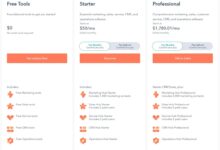
HubSpot offers a powerful free CRM with contact management, email tracking, and basic automation. Paid tiers start at $45/month (Starter), making it cheaper than Salesforce’s Professional edition.
- Free plan includes most essential features
- Intuitive interface, easier for non-technical users
- Less scalable for enterprise needs
While HubSpot is more affordable, it lacks the depth of customization and global support that Salesforce offers. For businesses planning to scale, the Salesforce CRM cost may be justified by long-term flexibility.
Zoho CRM: Budget-Friendly but Limited
Zoho CRM starts at just $14/user/month (Standard plan) and offers robust automation, AI-powered insights, and multi-channel communication tools.
- Excellent value for small to mid-sized businesses
- Integrated suite of Zoho apps (Books, Desk, etc.)
- Support and uptime not as reliable as Salesforce
Zoho is ideal for cost-conscious companies, but its ecosystem isn’t as mature or widely adopted as Salesforce’s. The Salesforce CRM cost is higher, but so is the return for complex operations.
Microsoft Dynamics 365: The Enterprise Challenger
Dynamics 365 Sales starts at $65/user/month (Professional) and integrates seamlessly with Microsoft 365. For organizations already using Outlook and Teams, this can reduce training and integration costs.
- Tight integration with Office apps
- Flexible deployment options (cloud, on-premise, hybrid)
- Can become expensive with add-ons
Dynamics 365 competes directly with Salesforce in the enterprise space. While its base price is lower, the total Salesforce CRM cost may still be more predictable due to Salesforce’s transparent (though high) pricing model.
How to Reduce Your Salesforce CRM Cost Strategically
You don’t have to pay full price. With smart planning, you can significantly reduce your Salesforce CRM cost without sacrificing functionality.
Negotiate with Salesforce or a Partner
Salesforce rarely gives discounts publicly, but they’re often available. Larger contracts (50+ users) are more likely to receive 10–25% discounts, especially if you commit to a 3-year term.
- Work with a Salesforce partner—they may offer bundled deals
- Ask for promotional pricing during fiscal quarter ends
- Consider nonprofit or education pricing if eligible
Many customers don’t realize that list prices are negotiable. A well-prepared RFP (Request for Proposal) can lead to substantial savings on Salesforce CRM cost.
Optimize User Licenses
Not every employee needs a full Salesforce license. Use feature licenses or community licenses for users who only need limited access.
- Chatter Free: $0 – for collaboration only
- Customer Community: $7/user/month – for external users
- Lightning Platform Starter: $25/user/month – for app builders
By assigning the right license type, you can cut costs by 30–50%. Regular license audits help prevent paying for inactive users.
Leverage Free Tools and Trailhead
Salesforce offers Trailhead, a free learning platform, to train your team. Instead of paying for external trainers, empower employees to learn at their own pace.
- Trailhead has over 2,000 modules
- Certifications boost internal expertise
- Reduces dependency on consultants
Using free resources like Trailhead can slash training costs and reduce the overall Salesforce CRM cost significantly.
Salesforce CRM Cost for Specific Industries
The Salesforce CRM cost varies by industry due to specialized editions and compliance requirements. Let’s explore how pricing shifts across sectors.
Healthcare: Salesforce Health Cloud
Salesforce Health Cloud is built for patient engagement and care coordination. It starts at around $300/user/month and requires HIPAA compliance, which may involve additional security configurations.
- Integrates with EHR systems
- Supports care teams and patient journeys
- High implementation cost due to data sensitivity
The Salesforce CRM cost in healthcare is among the highest due to regulatory demands and integration complexity.
Financial Services: Financial Services Cloud
Tailored for banks, wealth managers, and insurance firms, this edition starts at $500/user/month. It includes relationship mapping, compliance logging, and client lifecycle management.
- Meets FINRA, SEC, and GDPR standards
- Advanced analytics for client portfolios
- Requires extensive data governance
While the Salesforce CRM cost is steep, financial institutions benefit from improved client retention and regulatory compliance.
Retail and E-commerce: Commerce Cloud Integration
Retailers often combine Sales Cloud with Commerce Cloud, which can cost $1,000+ per month even before user fees. The total Salesforce CRM cost here includes shopping cart integration, personalization engines, and order management.
- Unified customer view across online and offline channels
- High ROI for omnichannel strategies
- Requires dedicated IT support
For retail, the Salesforce CRM cost is an investment in customer experience and long-term loyalty.
Real-World Salesforce CRM Cost Breakdowns by Company Size
Let’s look at actual cost scenarios for small, medium, and large businesses to understand how the Salesforce CRM cost plays out in practice.
Small Business (1–10 Users)
A 5-person sales team using Professional Edition at $75/user/month pays $4,500 annually. Add $10,000 for implementation and $2,000 for training: total Year 1 cost = $16,500.
- Monthly subscription: $375
- Implementation: $10,000 (one-time)
- Training: $2,000
- Total Year 1: ~$16,500
For small teams, the Salesforce CRM cost is manageable but requires careful planning to avoid overspending on unused features.
Mid-Sized Company (50 Users)
A 50-user Enterprise edition at $150/user/month costs $90,000 annually. Implementation: $40,000. Customization: $25,000. Training: $10,000. Total Year 1: $165,000.
- Subscription: $90,000/year
- Implementation: $40,000
- Custom development: $25,000
- Training & support: $10,000
- Total Year 1: $165,000
At this scale, the Salesforce CRM cost becomes a major line item. ROI depends on improved sales efficiency and data-driven decision-making.
Enterprise (500+ Users)
For 500 users on Unlimited edition ($300/user/month), annual subscription is $1.8 million. Implementation: $100,000+. Custom apps: $200,000+. Ongoing support: $150,000/year. Total Year 1: ~$2.25 million.
- Subscription: $1.8M
- Implementation: $100K–$300K
- Custom development: $200K+
- Ongoing support: $150K/year
- Total Year 1: $2.25M+
Enterprises must justify the Salesforce CRM cost with measurable gains in productivity, customer satisfaction, and revenue growth.
Future Trends Affecting Salesforce CRM Cost
The pricing landscape for CRM platforms is evolving. Here’s what could impact the Salesforce CRM cost in the coming years.
AI and Einstein Analytics: Premium Pricing Ahead?
Salesforce Einstein is already included in higher editions, but advanced AI features like predictive lead scoring and automated insights may become separate paid modules.
- AI-driven automation saves time but adds cost
- Future pricing may shift to usage-based models
- Competitors are bundling AI for free
As AI becomes central to CRM, the Salesforce CRM cost could rise unless bundled more inclusively.
Subscription Fatigue and Demand for Flexibility
Businesses are pushing back against rigid annual contracts. Salesforce may introduce more flexible billing, pay-per-use options, or tiered AI access to stay competitive.
- Monthly billing options may expand
- Shorter contract terms could increase per-user cost
- Usage-based pricing for API calls or storage
These changes could make the Salesforce CRM cost more predictable—or more volatile—depending on usage patterns.
Consolidation of Cloud Services
Salesforce is expanding beyond CRM into marketing, service, and analytics clouds. Bundling these into “Customer 360” suites may offer discounts but lock customers into long-term commitments.
- Bundle deals reduce per-product cost
- Increased vendor lock-in risk
- Higher total spend over time
The trend toward all-in-one platforms means the Salesforce CRM cost may be just the entry point to a much larger ecosystem.
What is the starting price for Salesforce CRM?
The starting price for Salesforce CRM is $25 per user per month for the Essentials edition. However, most businesses find that the Professional edition ($75/user/month) offers a better balance of features and value.
Are there any hidden costs with Salesforce CRM?
Yes, common hidden costs include implementation fees, customization, training, and third-party integrations. These can easily double the total Salesforce CRM cost over the first year.
Can I reduce my Salesforce CRM cost?
Absolutely. You can reduce costs by negotiating contracts, optimizing user licenses, using free training tools like Trailhead, and avoiding unnecessary add-ons.
Is Salesforce worth the cost compared to other CRMs?
For small businesses, cheaper alternatives like HubSpot or Zoho may suffice. But for mid-sized to large enterprises needing scalability, customization, and global support, Salesforce often justifies its higher cost.
Does Salesforce offer discounts for nonprofits?
Yes, Salesforce offers significant discounts—up to 80% off—for registered nonprofit organizations through its Power of Us program. This dramatically reduces the Salesforce CRM cost for eligible groups.
Understanding the true Salesforce CRM cost goes far beyond the monthly subscription fee. It includes implementation, customization, training, and long-term scalability. While Salesforce is one of the most expensive CRM platforms, its flexibility, ecosystem, and global support make it a top choice for businesses that plan to grow. By negotiating wisely, optimizing licenses, and leveraging free resources, you can control costs and maximize ROI. Whether you’re a startup or a multinational corporation, knowing the full picture of Salesforce CRM cost empowers smarter decisions and better outcomes.
Further Reading:
