Welcome to the ultimate deep dive into the world of system boards! Often called the backbone of any computing device, the system board is where magic happens behind the scenes. Let’s explore its secrets, functions, and why it’s so vital.
What Is a System Board?

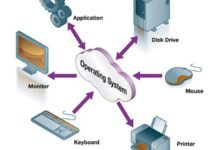
The system board, commonly known as the motherboard in personal computers, is the primary printed circuit board (PCB) in any computing device. It serves as the central hub that connects and allows communication between all critical hardware components like the CPU, RAM, storage drives, and peripherals.


Core Definition and Function
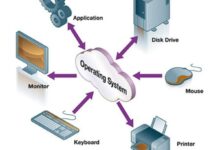
The system board is not just a physical platform; it’s an intelligent interface that manages data flow and power distribution. Every signal from your keyboard press to a complex graphics rendering passes through this board. Without it, components would be isolated islands with no way to interact.
- Acts as the main communication backbone
- Distributes power from the PSU to components
- Houses critical chips like the BIOS/UEFI firmware
“The system board is to a computer what the nervous system is to the human body.” — Tech Hardware Journal, 2023
Common Synonyms and Usage
While “system board” is a general term used across various devices—from servers to embedded systems—the term “motherboard” is more common in consumer PCs. In laptops, it’s often referred to as the mainboard. Despite the different names, the core function remains the same: integration and coordination.
For consistency, we’ll use “system board” throughout this guide to emphasize its universal application across desktops, servers, industrial machines, and mobile devices. You can learn more about motherboard evolution at Computer History Museum.
Historical Evolution of the System Board
The journey of the system board mirrors the evolution of computing itself. From bulky, limited-function boards in the 1970s to today’s ultra-compact, high-speed marvels, the system board has undergone revolutionary changes.
Early Days: 1970s–1980s
The first system boards were simple and designed for specific tasks. The Altair 8800, released in 1975, used a passive backplane with no CPU on the board. Users had to add processors and memory via expansion cards. These boards supported minimal I/O and were primarily used by hobbyists.
- Limited integration; CPUs and memory were add-ons
- No standardized form factors
- Used edge connectors and discrete logic chips
These early designs laid the groundwork for modular computing. The IBM PC, introduced in 1981, was a turning point, featuring a full-featured system board with integrated CPU, RAM, and expansion slots.
Standardization and Growth: 1990s–2000s
The 1990s saw the rise of standardized form factors like ATX, introduced by Intel in 1995. This allowed manufacturers to produce compatible components, fueling the PC revolution. System boards began integrating more features—onboard audio, USB ports, and LAN controllers—reducing the need for expansion cards.
- Introduction of ATX, microATX, and later Mini-ITX
- Integration of southbridge and northbridge chipsets
- Support for faster buses like PCI and AGP
This era also saw the rise of BIOS firmware, allowing users to configure hardware settings at startup. The system board was no longer just a connector—it became a configurable platform.
Modern Era: 2010s–Present
Today’s system boards are packed with intelligence. UEFI firmware has replaced legacy BIOS, offering faster boot times, secure boot, and graphical interfaces. High-speed interfaces like PCIe 4.0 and 5.0 enable blazing data transfer, while onboard Wi-Fi, Bluetooth, and M.2 NVMe slots make system boards more versatile than ever.
- Support for multi-core CPUs and high-capacity RAM
- Advanced power delivery for overclocking
- Embedded security features like TPM 2.0
Miniaturization has also led to system boards in smartphones and IoT devices, where space and power efficiency are critical. Explore modern motherboard designs at Intel’s Motherboard Technology Hub.
Key Components of a System Board
Understanding the anatomy of a system board is essential to appreciating its complexity. Each component plays a specific role in ensuring the system functions smoothly.
CPU Socket and Chipset
The CPU socket is the physical interface where the processor is installed. It must match the CPU’s pin configuration (e.g., LGA 1700 for Intel 12th Gen, AM5 for AMD Ryzen 7000). The chipset, usually located near the CPU, acts as a traffic controller, managing data flow between the CPU, RAM, and peripherals.
- Chipsets determine supported RAM types, PCIe lanes, and USB versions
- Examples: Intel Z790, AMD X670
- Chipset overheating can be mitigated with heatsinks
The chipset is often split into Northbridge (historically handling high-speed connections) and Southbridge (managing slower I/O). Modern CPUs integrate Northbridge functions, leaving the chipset to handle I/O.
RAM Slots and Memory Controller
RAM slots, or DIMM slots, are where memory modules are installed. Most modern system boards support DDR4 or DDR5 RAM in dual, triple, or quad-channel configurations. The memory controller, now integrated into the CPU, communicates directly with these slots to manage data access speed and stability.
- DDR5 offers higher bandwidth and lower voltage than DDR4
- Slot color coding indicates channel configuration
- XMP (Intel) or DOCP (AMD) profiles allow easy overclocking
Proper RAM installation is crucial—mismatched speeds or incorrect seating can cause boot failures.
Expansion Slots and Connectors
Expansion slots allow users to add functionality via add-on cards. The most common is PCIe (Peripheral Component Interconnect Express), available in x1, x4, x8, and x16 variants. These slots are used for GPUs, NVMe SSDs, Wi-Fi cards, and sound cards.
- PCIe 4.0 doubles the bandwidth of PCIe 3.0
- M.2 slots support both SATA and NVMe SSDs
- Legacy PCI and AGP slots are now obsolete
Other connectors include SATA for storage, front-panel headers for power/reset switches, and USB headers for case ports. The density and variety of connectors reflect the system board’s role as a central hub.
Types of System Boards by Form Factor
Form factor refers to the physical size, shape, and layout of a system board. It determines compatibility with cases, power supplies, and cooling solutions.
ATX and Its Variants
ATX (Advanced Technology eXtended) is the most common desktop form factor, measuring 12 x 9.6 inches. It offers ample space for multiple PCIe slots, RAM slots, and cooling. Variants include:
- Extended ATX (EATX): Larger, used in workstations and servers
- microATX: 9.6 x 9.6 inches, fewer expansion slots
- Mini-ITX: 6.7 x 6.7 inches, ideal for compact builds
ATX boards are popular in gaming PCs and workstations due to their balance of size and expandability.
Mini and Embedded System Boards
For space-constrained applications, smaller form factors dominate. Mini-ITX is common in home theater PCs and small form factor (SFF) builds. Even smaller are Nano-ITX and Pico-ITX, used in embedded systems like digital signage and industrial controllers.
- Often feature integrated CPUs (e.g., Intel NUC, AMD Ryzen Embedded)
- Limited expansion but highly power-efficient
- Used in kiosks, medical devices, and automation systems
These boards prioritize reliability and low power consumption over raw performance.
Server and Workstation System Boards
Designed for heavy-duty tasks, server system boards support multiple CPUs, vast amounts of RAM, and redundant power supplies. They often feature:
- LGA 4677 or SP5 sockets for dual-socket configurations
- 16+ DIMM slots supporting ECC (Error-Correcting Code) RAM
- Multiple PCIe 5.0 x16 slots for GPU or accelerator cards
Brands like Supermicro and ASUS offer server boards with IPMI (Intelligent Platform Management Interface) for remote monitoring. Learn more at Supermicro Motherboard Series.
How a System Board Works: The Data Flow
The system board is not just a static platform—it’s a dynamic ecosystem managing data, power, and control signals in real time.
Boot Process and BIOS/UEFI
When you power on a device, the system board initiates the boot sequence. The BIOS (Basic Input/Output System) or modern UEFI (Unified Extensible Firmware Interface) performs a Power-On Self-Test (POST), checks hardware integrity, and loads the operating system from storage.
- UEFI supports larger drives (over 2TB) and secure boot
- Firmware updates can improve stability and add features
- CMOS battery preserves BIOS settings when powered off
UEFI firmware also allows booting from network or USB devices, essential for system recovery and deployment.
Data Pathways: Buses and Interfaces
Data travels across the system board via buses—dedicated pathways for information. Key buses include:
- Front-Side Bus (FSB): Legacy connection between CPU and northbridge
- DMI (Direct Media Interface): Connects CPU to chipset (Intel)
- Infinity Fabric: AMD’s interconnect between CPU cores and I/O die
Modern boards use high-speed serial interfaces like PCIe and SATA, which are faster and more scalable than parallel buses.
Power Delivery and Regulation
The system board doesn’t generate power but regulates it. The VRM (Voltage Regulator Module) converts 12V from the PSU to the precise voltage required by the CPU (e.g., 1.25V). High-end boards use multi-phase VRMs for stable power under load, crucial for overclocking.
- VRM phases reduce heat and ripple
- Chokes, MOSFETs, and capacitors are key VRM components
- PWM controllers manage phase switching
Poor power delivery can lead to system instability or hardware damage.
System Board in Different Devices
While PCs are the most familiar, system boards are everywhere—from smartphones to supercomputers.
Desktops and Laptops
In desktops, system boards are modular and user-upgradable. Users can swap CPUs, RAM, and GPUs. In laptops, the board is highly integrated, often with soldered components. Upgrades are limited to RAM and storage in most models.
- Laptop boards include embedded keyboards, touchpads, and battery controllers
- Thermal design is critical due to space constraints
- Repair often requires board-level soldering
Apple’s MacBook logic boards are prime examples of high integration, combining CPU, GPU, and SSD in a single package.
Servers and Data Centers
In data centers, system boards are built for reliability, scalability, and remote management. Features include:
- Dual or quad CPU support
- Hot-swappable drive bays and power supplies
- Redundant BIOS and network boot capabilities
These boards run 24/7 and must handle massive workloads, making error detection and correction vital.
Embedded and IoT Devices
From smart thermostats to industrial robots, embedded system boards are designed for specific tasks. They often use System-on-Chip (SoC) designs, where CPU, GPU, and I/O are on a single die.
- Low power consumption (e.g., ARM-based boards)
- Real-time operating systems (RTOS)
- Long lifecycle support (10+ years)
Raspberry Pi is a popular example of an embedded system board used in education and prototyping.
Troubleshooting and Maintenance
Even the most robust system board can face issues. Knowing how to diagnose and maintain it is crucial.
Common System Board Failures
Failures can stem from power surges, overheating, or component wear. Common symptoms include:
- Failure to power on (no POST)
- Random reboots or blue screens
- USB or PCIe devices not recognized
Capacitor bulging or leakage is a telltale sign of aging. Replacing faulty capacitors can sometimes revive a board.
Diagnostic Tools and Methods
Technicians use tools like POST testers, multimeters, and thermal cameras to diagnose issues. Software tools like CPU-Z can verify component recognition.
- Check CMOS battery if settings reset on reboot
- Inspect for physical damage or burnt smells
- Test with minimal hardware (CPU, one RAM stick, PSU)
Isolating the problem helps determine if the issue is with the board or another component.
Best Practices for Longevity
To extend the life of your system board:
- Use a surge protector or UPS
- Ensure proper airflow and cooling
- Keep firmware updated
Avoid overclocking without adequate cooling, and handle the board with ESD (electrostatic discharge) precautions.
Future Trends in System Board Technology
The system board is evolving to meet demands for speed, efficiency, and intelligence.
AI-Integrated System Boards
Future boards may include dedicated AI accelerators for on-device machine learning. NVIDIA and Intel are already integrating AI capabilities into chipsets for real-time analytics and security.
- Onboard AI for predictive maintenance
- Enhanced voice and image processing
- Lower latency for edge computing
These boards could power smart homes, autonomous vehicles, and advanced robotics.
Sustainability and Modular Design
As e-waste grows, manufacturers are exploring modular, repairable designs. Framework Laptop and Fairphone lead this trend, allowing users to replace system board modules instead of entire devices.
- Reduced environmental impact
- Longer product lifecycles
- Lower total cost of ownership
Recyclable materials and lead-free soldering are also becoming standard.
Quantum and Optical Interconnects
While still experimental, quantum computing and optical data transfer could revolutionize system boards. Optical interconnects promise terabit-speed data transfer with minimal heat, ideal for next-gen data centers.
- Replacing copper traces with photonic waveguides
- Integration with quantum processors
- Challenges in miniaturization and cost
Research is ongoing, but the future of the system board is brighter—and faster—than ever.
What is the difference between a system board and a motherboard?
The terms are often used interchangeably, but “system board” is a broader term used in various electronic devices, while “motherboard” typically refers to the main board in a personal computer. Both serve the same fundamental purpose.
Can I upgrade my system board?
Yes, but it depends on the device. In desktop PCs, upgrading the system board is common and allows for CPU and RAM improvements. In laptops and smartphones, upgrades are usually not feasible due to high integration.
How do I know if my system board is failing?
Signs include failure to boot, random crashes, unrecognized hardware, or visible damage like bulging capacitors. Diagnosing with minimal hardware or diagnostic tools can confirm the issue.
What should I look for when buying a new system board?
Consider CPU socket compatibility, RAM type and capacity, expansion slots, form factor, and features like Wi-Fi, USB-C, and overclocking support. Always check compatibility with your case and PSU.
Is the system board the most important part of a computer?
While the CPU is often seen as the “brain,” the system board is the “nervous system.” It’s equally critical because it connects and enables all components to function together. Without it, no other part can work.
The system board is far more than just a piece of circuitry—it’s the foundation of modern computing. From its historical roots to cutting-edge innovations, it continues to evolve, enabling faster, smarter, and more efficient devices. Whether you’re building a PC, repairing a laptop, or exploring IoT, understanding the system board empowers you to make informed decisions. As technology advances, so too will the capabilities and design of this essential component, ensuring it remains at the heart of the digital world.
Further Reading: